
KVT – The Art of Rich Streitmatter Tran

KVT in meandering mood at Manzi
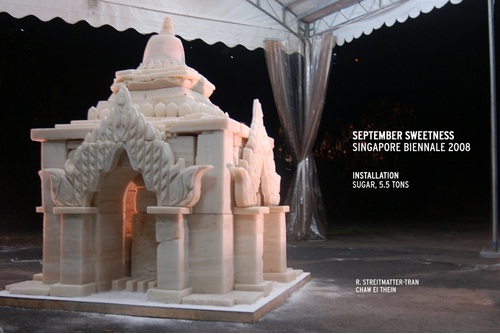
Rich Streitmatter Tran is one of those artists who always leave me a bit in awe after I see their works and read their academic papers.
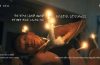
Born in 1972 he’s an academic at RMIT in TPHCM but rather than spend time blowing his trumpet I’ll connect you to a link about him and that fabulous creation seen above which he created with Burmese artist Chaw Ei Thein about the erosion, at that time, of the people of Myanmar’s optimism for an improved life.
He was brought to Hanoi to give a talk at the Flying High extravaganza at the Japan Foundation…and that I missed because I was in TPHCM….but them’s the breaks!
Any way I caught up with one of his installations when I got back just when the weather in the capital was vacillating between autumn warmth and winter chill and when I made my second excursion to Manzi, a place that doesn’t vacillate at all about its quality collection of art collectables and its quality hospitality.
At first glance it appears that a bench press has been inadvertently placed in an upstairs corner…perhaps to capture those patrons who forgot to go to the gym that morning and are hyper-ventilating about their level of muscle-boundness.
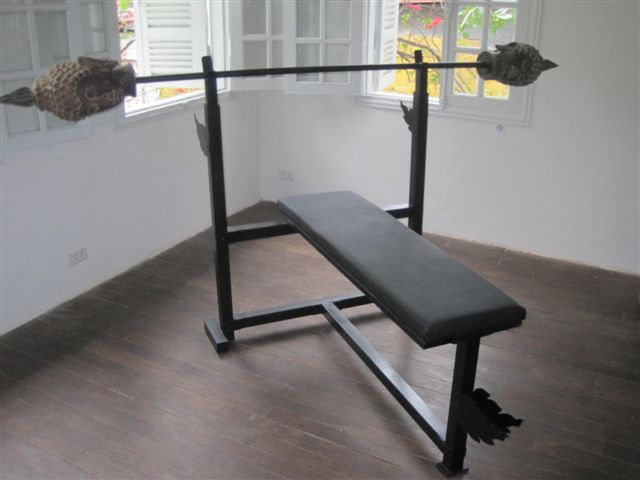
But it’s an art piece that’s called ‘De Rerum Natura (On the Nature of Things)’ and is the third in a series of intellectually interesting sculptural works that began with a 2009 excursion into the philosophy of Lao Tzu (Lao Tzu Dreams of the Large Hadron Collider) pictured here at 10 Chancery Lane Gallery in London…
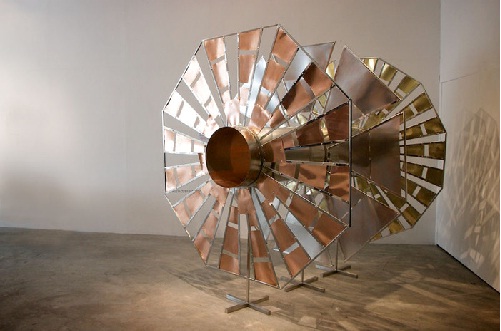
And here’s a link to just what the LHC is all about but I leave it to you to make the all important mental link to Lao Tzu
Streitmatter Tran continued with a digression into the realm of the Greek god Hephaestus with a 2010 work called ‘Hephaestus’ Lure’. Hephaestus was the god of fire who forged the weapons for the gods and mortals besides having other adventures after he was hurled from the heavens and landed on Lemnos where he created Pandora to lure mankind into a trap. And here’s a link to the trap the artist conceptualized
The work at Manzi jumps to the Romans and the poem ‘De Rerum Natura’ by the philosopher poet Lucretius which, when it was rediscovered, had a huge effect on the way modern man(since the Renaissance) can think and conceptualize when freed from the hocus pocus of gods and religions and didactic ideologies.
But why re-invent the wheel when a recent article from the New Yorker says it all with the following text taken from the follow on link
‘The poem’s rediscovery prompted such a swerve. The cultural shift of the Renaissance is notoriously difficult to define, but it was characterized, in part, by a decidedly Lucretian pursuit of beauty and pleasure. The pursuit shaped the dress and the etiquette of courtiers, the language of the liturgy, the design and decoration of everyday objects. It suffused Leonardo da Vinci’s scientific and technological explorations, Galileo’s vivid dialogues on astronomy, Francis Bacon’s ambitious research projects, and Richard Hooker’s theology. Even works that were seemingly unrelated to any aesthetic ambition—Machiavelli’s analysis of political strategy, Walter Raleigh’s description of Guiana, Robert Burton’s encyclopedic account of mental illness—were crafted in such a way as to produce pleasure. And this pursuit, with its denial of Christian asceticism, enabled people to turn away from a preoccupation with angels and demons and to focus instead on things in this world: to conduct experiments without worrying about infringing on God’s jealously guarded secrets, to question authorities and challenge received doctrines, to contemplate without terror the death of the soul’
So how does the Manzi installation fit into the Lucretius poem and the statement the artist makes about this series: that he brings together imaginary encounters with ancient philosophers and modern science and technology?
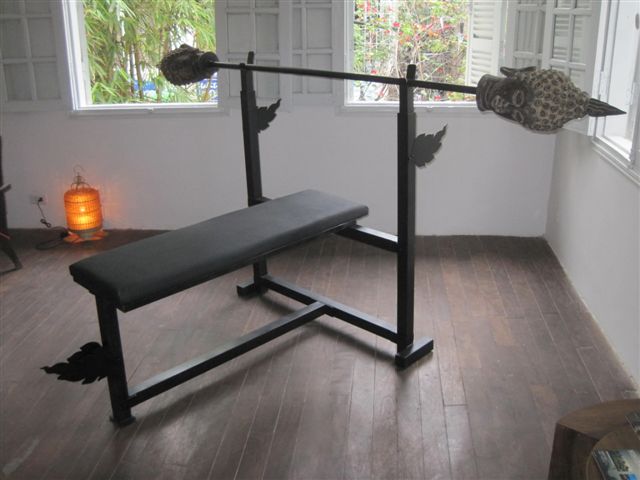
I’ve had lots of fun conjecturing and even been able to rediscover a lot about that marvelous ancient Epicurus whose ancient fame I grew to love when I used to eat at a fabulous restaurant named in his honor in my home town… that unfortunately is no longer cooking for us since the chef left the dejected proprietor for a different same sex lover.
From Wikepedia….For Epicurus, the purpose of philosophy was to attain the happy, tranquil life, characterized by ataraxia—peace and freedom from fear—and aponia—the absence of pain—and by living a self-sufficient life surrounded by friends. He taught that pleasure and pain are the measures of what is good and evil; death is the end of both body and soul and should therefore not be feared; the gods do not reward or punish humans; the universe is infinite and eternal; and events in the world are ultimately based on the motions and interactions of atoms moving in empty space.
So I leave your meaning and your enjoyment of the Bench Press up to you.
At one instance I wanted to get on board and pretend to build my muscles as I struggled with empty headed mysteries of religion and spirituality, all the while meditating on the wiles of Mercury.
Wonderful stuff and worth a visit even if I am way off track about it all!
Another link to the work of Rich Streitmatter Tran as a performance artist

| Kiem Van Tim is a keen observer of life in general and the Hanoi cultural scene in particular and offers some of these observations to the Grapevine. KVT insists that these observations and opinion pieces are not critical reviews. Please see our Comment Guidelines / Moderation Policy and add your thoughts in the comment field below. |