Between Memory and Distance: Rocco Ho and the Reconfiguration of Vietnamese Identity in Contemporary Photography
Interview by Nguyễn Tú Hằng for Hanoi Grapevine
Images provided by the artist
Kindly credit Hanoi Grapevine when sharing the article
Please do not copy or repost without permission
In his solo exhibition Photographing Distant Memories at Nguyen Wahed Gallery (New York), photographer Rocco (Quốc Anh) Hồ approaches memory not as a site of pure nostalgia, but as a deliberate practice through which time, identity, and the lived experience of a Vietnamese subject in diaspora are restructured. Working with large-format and medium-format film cameras, and employing a hybrid methodology that combines analogue and digital processes, Rocco positions photography as a space of slowness—one in which memory is preserved, stretched, and reimagined within the context of contemporary global conditions.
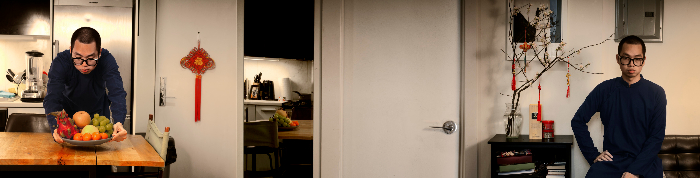
10 x 40 inches
Color C Print
In conversation with Hanoi Grapevine, Rocco reflects on reconstructing everyday Vietnamese rituals in the heart of New York, on how geographical distance generates a form of cultural dialogue between Vietnam and the United States, and on the development of a disciplined photographic practice shaped by his training at Parsons and professional experience. Through this lens, Vietnamese identity emerges not as a fixed relic of the past, but as a living, complex, and continuously evolving presence in the present.
Could you share why you chose to reconstruct memory rather than document reality directly, and how this approach relates to your lived experience as a Vietnamese artist based in New York?
I chose to reconstruct memory rather than document reality because of these seemingly small moments: waiting for phin coffee to slowly drip, sitting on plastic stools along the sidewalk—ordinary routines in Vietnam that I realized I took for granted. It was only after moving to New York, as daily life became increasingly demanding and accelerated, that I began to deeply miss the simplicity and quiet rhythm embedded in those everyday experiences.
Working from memory reflects my experience as a Vietnamese artist living in New York. Distance creates space for reflection, longing, and reinterpretation. By staging these moments, I am not attempting to replicate reality as it once was, but rather to give form to memory—to hold onto Hanoi and Vietnam as they now exist emotionally for me. Through this process, the photographs become a way of acknowledging how cultural identity and pride continue to reside within us, even when we are far from home.
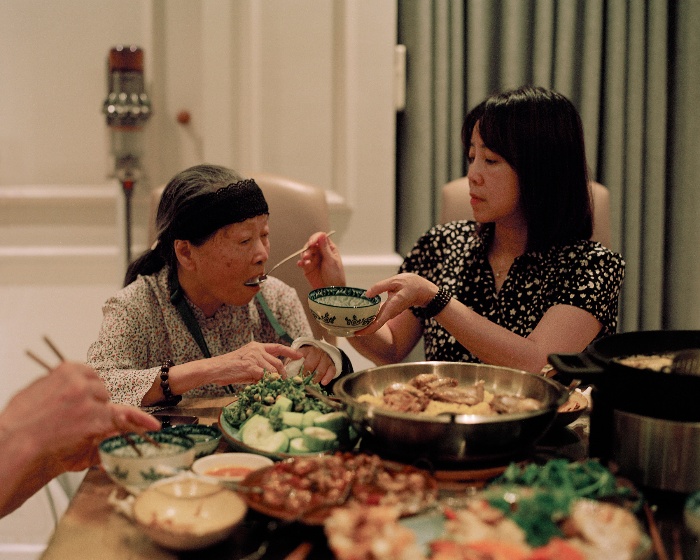
11 x 14 inches
Color C Print
How does working with medium-format and large-format film cameras shape your approach to memory, temporality, and slowness within your photographic practice?
Working with medium-format and large-format film cameras allows me to shape the photographs with intention. The cameras imposed a slower rhythm for my practice which is essential on how I approach memories and time. These cameras required intention as each exposure demanded attention, patience and preparation. Therefore, such a way of working mirrors my experience with memory and nostalgia itself: fragmented, deliberate, and never instantaneous.
Large-format, in particular, allows me to linger with a scene. The physical act of setting up the camera, composing under the dark cloth, and committing to a single sheet of film creates a heightened awareness of time passing. Every decision becomes consequential; even subtle shifts in light, shadow, or movement can alter the emotional weight of a photograph. This attentiveness further encourages a deeper engagement with the moment.
Medium format sits somewhere in between. The camera offers flexibility, but still resists immediacy. Both of the cameras with larger negative and ability to work with smaller aperture allows details to unfold within images creating depth and dimensionality. This results in images that are rendered more tactile and immersive, allowing memories to be revisited with vividness and emotional weight away from the ephemerality of time.
For this project, slowness becomes a conceptual choice. It gives me the space to reconstruct memory rather than chase moments as they happen. By working this way, I aim to create photographs that function as stoppers – images that hold the audience close, forcing them to engage and let them appreciate their presence. The images are not about capturing time as it unfolds, but about holding time which allows memory, gesture, and atmosphere to surface gradually, much like the way longing and nostalgia reveal themselves over time.
By restaging distinctly Vietnamese imagery within the urban context of New York, do you see your work as creating a form of cultural dialogue between Vietnam and the United States?
I do see my work as creating a form of cultural conversation between Vietnam and the US. As a young adult living in the United States, you’re constantly navigating with differing values and ways of living: whether they are between individual autonomy and familial collectivism or between quiet personal drive vs. outspoken ambition. These contrasts shape my everyday experience and naturally find it way into my photographs.
By restaging distinct Vietnamese memories within the urban context of New York City, I’m not attempting to resolve any cultural differences but rather, to hold them in tension. The resulting photographs reflect the Vietnamese values that I constantly carry with me despite living elsewhere. Perhaps, cultural values are not changed by distance or movement but it’s something that persists, adapts and remains present in one’s mind and consciousness.
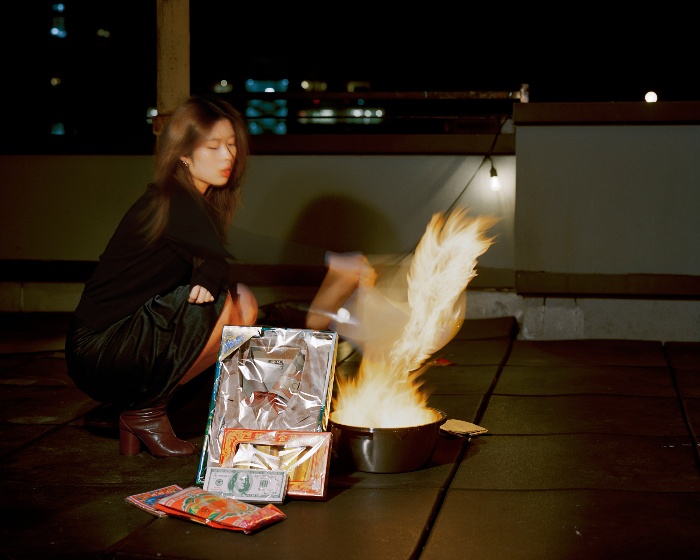
16 x 20 inches
Color C Print
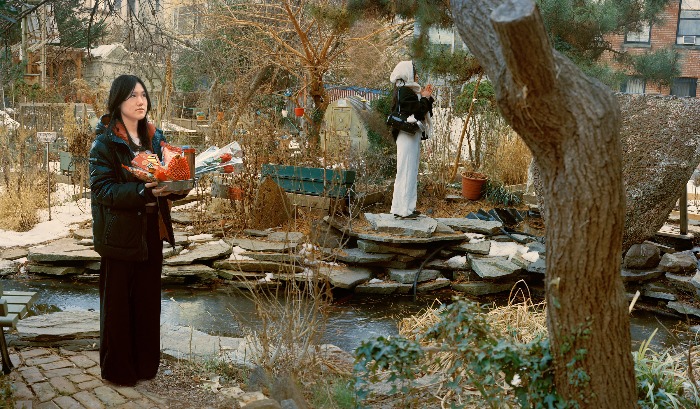
35 x 60 inches
Color C Print
How do you situate your practice within the landscape of contemporary photography, particularly in relation to your academic training at Parsons and your professional experience working with Steven Klein?
In a hyper saturated world with a short attention span and looming presence of AI generated imagery, I situated my practice as a discipline and author driven approach. Within that context, rigor and intention is very important to me. My work engages analogue processes through shooting on film and printing as C-prints while also embracing digital post-production along the way. This hybrid way of working reflects a deep understanding of both photographic tradition and contemporary image-making tools. Digital manipulation in my practice is never about spectacle or excess, but about refinement, control, and intention, shaping the image with the same care as the moment of exposure.
My years in the BFA Photography program at Parsons played a major role in forming this approach. Having access to state-of-the-art facilities gave me a strong technical foundation, and when I first stepped into the darkroom, my focus was very much on mastering the still photograph. Over time, that perspective expanded. Being part of such a diverse and critically engaged community made me realize that a beautiful or well-executed image alone isn’t enough. You need to articulate a clear perspective and a distinctive voice. It was there that I began to understand my cultural identity not simply as subject matter, but as a conceptual framework that grounds my practice.
Working with Steven Klein reinforced these values in a very different way. Being in such a professional environment showed me what it means to maintain a singular voice while operating at a high level of technical and conceptual control. What stayed with me most was the balance between discipline and experimentation. That you have to understand the medium deeply while remaining open to new possibilities. That experience helped crystallize my own approach and affirmed that lasting images come from both mastery and intention.
Looking ahead, how do you hope your practice will contribute to broader understandings of Vietnamese identity within global contemporary art?
Looking ahead, I hope my practice contributes to a more nuanced understanding of Vietnamese identity within global contemporary art: one that moves beyond fixed narratives of history and postwar memory. Through my work, I’m interested in how Vietnamese identity is lived, carried and reimagined to the present, especially from the distance away from our motherland. In my photographs, the Vietnamese experiences exist in everyday rituals with its quiet presence but constantly evolved and defined by our contemporary time. Therefore, my photographs aim to illustrate the Vietnamese identity as complex, present and deeply human in the global context.
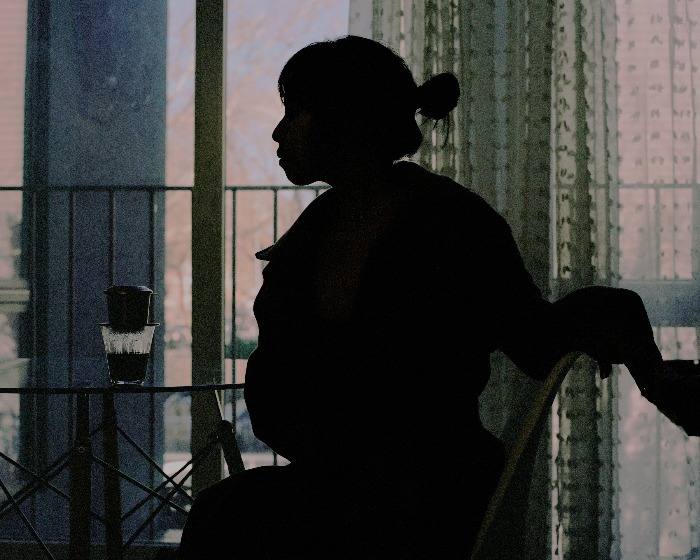
16 x 20 inches
Color C Print