
Lặng thinh và (mất) kết nối | Chiếu phim: Trò Chơi Gia Đình
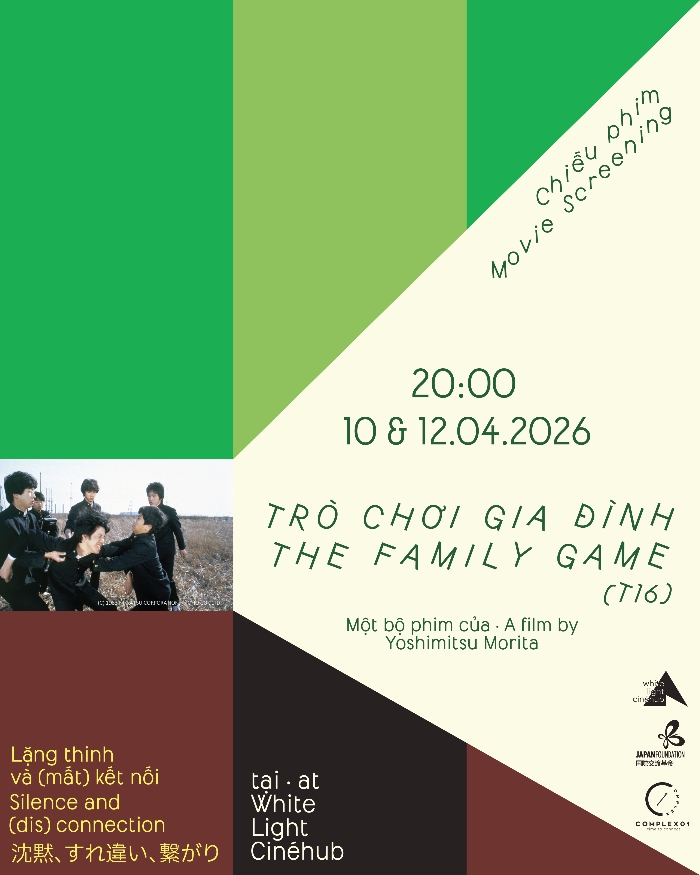
Buổi 1: 20:00, thứ Sáu 10/04/2026
Buổi 2: 20:00, Chủ nhật 12/04/2026
White Light Cinéhub
Tầng 3, COMPLEX 01
Số 29 ngách 31 ngõ 167 Tây Sơn, Hà Nội
Link đăng ký (mỗi đăng ký chỉ dành cho 01 người)
Thông tin từ ban tổ chức:
Được xem là một trong những tác phẩm tiêu biểu và quan trọng nhất của đạo diễn Morita, Trò chơi gia đình đã càn quét một loạt các giải thưởng ngay từ khi vừa ra mắt, từ Giải thưởng Viện Hàn lâm Nhật Bản và Giải thưởng Blue Ribbon Awards, cho đến Giải thưởng Phim của năm của tạp chí điện ảnh lâu đời nhất Nhật Bản Kinema Junpo.
Lấy bối cảnh một gia đình trung lưu điển hình, bộ phim mang đậm chất hài châm biếm đặc trưng của Morita, khắc họa sự hỗn loạn nảy sinh sau khi một gia sư “không giống ai” xuất hiện để kèm cặp cậu con trai út ôn thi lên cấp Ba. Dựa trên tiểu thuyết cùng tên của Yohei Honma, phiên bản điện ảnh táo bạo của Morita mang tới những suy ngẫm sâu sắc về cấu trúc gia đình tương lai. Một trong những cảnh nổi tiếng nhất của bộ phim là khi cả gia đình ngồi dùng bữa ở cùng một phía của bàn ăn, thay vì quây quần xung quanh. Nam tài tử Yusaku Matsuda, vốn là người hâm mộ lâu năm các tác phẩm của Morita, đã có một màn diễn xuất tuyệt vời trong vai người gia sư lập dị.
TRÒ CHƠI GIA ĐÌNH | 家族ゲーム (T16)
Yoshimitsu Morita, 1983
Thời lượng: 107’
Thể loại: Hài, Chính kịch
Ngôn ngữ: Tiếng Nhật với phụ đề tiếng Việt và tiếng Anh
Phim dành cho khán giả từ đủ 16 tuổi trở lên.
Sau khi hoàn thành “Trò chơi gia đình”, đạo diễn Morita, khi ấy mới 33 tuổi, đã tự thốt lên: “Tôi là một thiên tài, bộ phim này sẽ đứng đầu danh sách xếp hạng của Kinema Junpo.” Và chúng ta tin ông, bởi bộ phim không những dẫn đầu danh sách tạp chí năm đó, mà giờ đây, nhìn lại vào thập niên 80 khô cằn, khi những nỗ lực đấu tranh chính trị trước đó dường như tan biến, ta khó có thể tìm được bộ phim nào tự do, khó nắm bắt, và lắm tài thuật đến như vậy. Tương tự những tác phẩm của Ozu, bộ phim của Morita nên được tiếp cận như một “cuộc phiêu lưu thị giác”: sự hài hước của nó, nửa che đậy một cơn giận dữ nổi loạn, tận dụng mọi khía cạnh hình thức điện ảnh; thực tại nó dựng lên thiếu vắng chiều sâu cơ bản như một phim hoạt hình. Và không thể không nhắc đến tài năng tuyển vai của Morita, khi ông chọn tài tử phản diện Yusaku Matsuda vào vai người gia sư – một kẻ ngoài cuộc kỳ dị, khó đoán, mang vào căn hộ chật hẹp nhà Numata một năng lượng vừa đe dọa vừa giải phóng, như thể bộ phim đang dùng anh ta để đặt câu hỏi: liệu có gì thật sự diễn ra trong ngôi nhà này, hay tất cả chỉ là một trò chơi mọi người đã thuộc lòng từ lâu?
Tăng Linh
Về dự án:
Chương trình Silence and (dis) connection | Lặng thinh và (mất) kết nối là kết quả của dự án An Open Draft – Asia Film Programmers Lab (tạm dịch: Bản thảo Mở – Khóa đào tạo Những nhà phụ trách chương trình phim Châu Á) do Quỹ Giao lưu Quốc tế Nhật Bản khởi xướng. Bên cạnh mục tiêu thúc đẩy giao lưu văn hóa thông qua điện ảnh, dự án hướng tới việc nuôi dưỡng thế hệ giám tuyển và những nhà tổ chức chương trình phim kế cận tại Đông Nam Á và Nhật Bản.
Với gia đình là trục chủ đề chính, chương trình giới thiệu 05 bộ phim trải dài qua nhiều thập kỷ của xã hội Nhật Bản. Xuyên suốt các bộ phim là những ánh nhìn né tránh, những lời không được nói ra, những khoảng cách vô hình không tên. Nhưng cũng chính tại những điểm đứt gãy ấy, đâu đó vẫn le lói cơ hội để tái kết nối.
Lưu ý:
– Chương trình giới hạn 36 khán giả tham dự. Khán giả sẽ nhận được email xác nhận đăng ký thành công trong vòng 24h sau khi hoàn tất các thủ tục đăng ký (vui lòng kiểm tra hòm thư spam hoặc liên hệ page White Light Cinéhub trong trường hợp không nhận được thư xác nhận).
– Chương trình đón khách 30 phút trước giờ bắt đầu để sắp xếp chỗ ngồi và chọn đồ uống. Thời gian ngừng nhận khách là 15 phút sau khi chương trình bắt đầu. Vui lòng tới đúng giờ để đảm bảo trải nghiệm người xem.
– Vui lòng không mang đồ ăn và đồ uống từ bên ngoài vào khi tham gia chương trình.
– Khi tham gia, khán giả đồng ý cho phép chương trình được quyền sử dụng hình ảnh, ý kiến của khán giả để làm tư liệu truyền thông cho chương trình.
– Coupon không được chuyển nhượng hoặc bán lại dưới bất kỳ hình thức nào.
– Nếu bạn đã đăng ký nhưng không thể tham gia, vui lòng thông báo cho chúng tôi trước ít nhất 72 giờ để được hoàn phí và nhường chỗ cho khán giả khác.
Silence and (dis) connection | Lặng thinh và (mất) kết nối được tổ chức bởi White Light Cinéhub, với sự tài trợ quý báu của Quỹ Giao lưu Quốc tế Nhật Bản và sự hỗ trợ truyền thông của COMPLEX 01 và Hanoi Grapevine, giới thiệu tới khán giả yêu điện ảnh 05 bộ phim được tuyển chọn với chủ đề gia đình trong xã hội Nhật Bản từ thập niên 1950 đến nay. Chương trình bao gồm các buổi chiếu phim và trò chuyện, diễn ra từ ngày 03/04 đến ngày 04/05/2026, tại White Light Cinéhub (29/31/167 Tây Sơn, Hà Nội).
Cập nhật thêm thông tin tại trang sự kiện.