
KVT – Day, Night and Covered
 |
 |
Editors note: Someone called Huy Truong wrote an excellent comment on KVT’s piece A Glorious Silken Moment chastising and challenging KVT.
Here is KVT’s response, followed by thoughts on the current exhibition at Bui Gallery.
OOPS
Well I was certainly found wanting on Wednesday. My stupidity is boundless and Huy Truong is quite correct in upbraiding me in his well-considered comment.
My only inadequate answer to the Brandenburg fiasco is that I was writing while listening to the Cello suites and catching tantalizing glimpses of a friend’s video-ed portions of Bamboo Rain. Teach me to re-read and self edit… especially late at night and after a large glass of mellow cabernet!! My penance today is that whenever I tune into classical internet radio the Brandenburg Concerti seem to be being played even though when I checked once, to see if I was being haunted, the work was by Tellerman, and then by Vivaldi.
Oh Bach!
When I started to give opinions on cultural events in Hanoi I hoped to elicit replies as informed and as educative as those by Huy Truong. It’s good to be taught a lesson in empathy and be given invaluable background about cultural institutions.
Day, Night and Covered
Photography is today’s most popular art form. Everyone’s got a camera, even if it is an addend to a mobile phone, and everyone has got one or two or a hundred masterpieces that should be framed and hung on a feature wall.
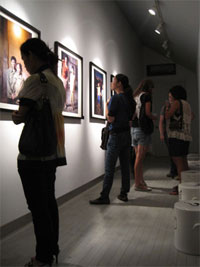
Then there are the photographers that poke their heads above the mass of wanna-bees, who have an artistic or dramatic eye. The Bui gallery has chosen four of these to collaboratively curate a group exhibition. It’s an intelligent show and it’s interesting to see how, and if, the images translate from book or online format to gallery wall installation.
It will be a popular exhibition and will probably arouse a minor dust cloud of controversy.
The four pieces by Vietnamese photographer Na Son Nguyen are a delicious entrée into the various black boxes that contain individual artist’s work. I like the ambiguity and in particular the dancing feet.
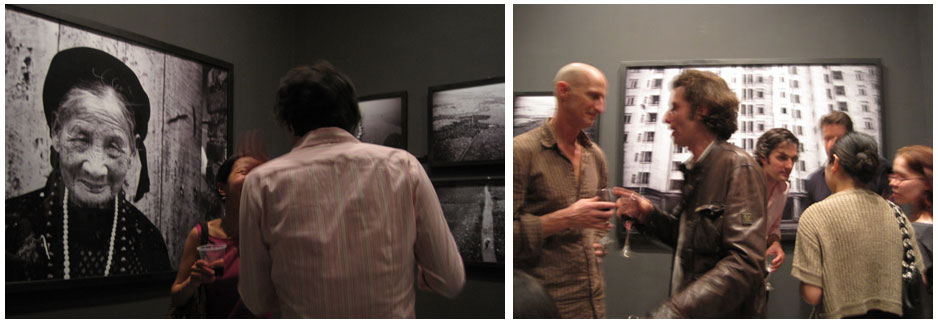
Work by American expat Aaron Joel Santos is effectively jammed into a space as small as a poor, extended family’s living area and I felt as if I should be on one of those small roundabouts and being slowly twirled around to take in the imposed landscapes… and the super-sized face of the old and venerable lady who observes the impositions with a visage landscaped by the wrinkles of time and patience… and who appears to delight in her own imposition… or is that one of those smiles that we outsiders often misinterpret?
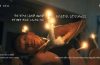
Upstairs, the images by another US expat, Jamie Maxtone-Graham, are like arresting movie stills. The photo essay of inhabitants, workers and habitués around the Long Bien Night Market is fascinating and really well conceived. One may start to question just who the viewer is as we are confronted by the stares of the portraits’ subjects. The series weaves issues of identity and environment into narratives that can start to question viewers’ own attitudes and understandings. It is difficult to remain neutral in the midst of those stares be they insolent, arrogant, angry, complacent, accusatory, blank… or of studied or embarrassed avoidance.
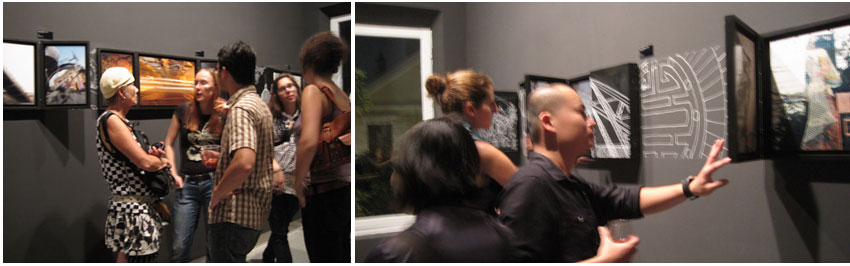
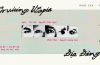
Just beyond the marketers are the cunningly designed triptych boxes overlaid with delicate drawings by Spanish expat, Diego Cortizas. At first glance this section seems almost a little too decorative but is a strong foil and a welcome island of relief from the stares. When you realize the theme and object of the work you sort of take a small gasp of pleasure and enjoy the rush and buzz and serenity. It’s far more dramatic to enter the space with its line drawing frieze when the boxes are closed because then you can enjoy the guilty pleasure of opening each one.
On the first night some viewers may have been taken aback by one of Santos’ images and similarly with one by Maxtone-Graham… particularly if they come from those countries where it is not au fait to display photographic images of naked or partially clad children or minors.
Some see this as political correctness gone mad. In many places it is prohibited to take photographs of children at beaches or swimming pools. Schools ban cameras at sports events. A sculpture of a naked boy installed at Bondi Beach in Sydney, Australia, as part of a world renowned festival of sculpture, had to have its buttocks and genitals covered. Last year (in Sydney, again) Bill Henson, an internationally famous photographer had some of his work impounded by police because it was deemed to sexualize – and had the potential to sexually exploit – a minor. Criminal charges were laid and later dismissed. Also last year The Tate in London removed an image of a naked 10-year-old Brooke Shields on advice from the Scotland Yard Vice Squad. And who doesn’t remember the 2008 fracas in the US over Annie Leibovitz’ image of Miley Cyrus in Vanity Fair.
Today, in many countries, there exists a combination of social hysteria around pedophilia and a fear of technology and what technology can now do. Thus the antagonists are suggesting that the images can be used and abused on pedophilic and pornographic web sites and thus artistic license should be reined in and censorship imposed.
The images have since been removed but their phantom presence remains. A niggling question that arises from all photo journalistic work is that of permission and exploitation of the subjects. It is not a question that Maxtone-Graham needs to answer as in an installation as provocative as his the charged air that holds the question is perhaps an essential part of the viewer’s ethical reaction.
A Vietnamese friend asked my opinion on condescension on the part of the three expat exhibitors. This is a topic that a group of his older friends like to engage whenever they view outsiders’ comments on their culture. I declined to answer as I am often ambivalent about my own intentions, but it’s a question that the three could answer very intelligently and intellectually.
It is an unavoidable pity that the various black boxes have been tampered with and you can’t be alone when you want to interact with the prints.

| Not a reviewer, not a critic, “Kiếm Văn Tìm” is an interested, impartial and informed observer and connoisseur of the Hanoi art scene who offers highly opinionated remarks and is part of the long and venerable tradition of anonymous correspondents. Please add your thoughts in the comment field below. |