
KVT – One Man’s Castle is Another’s Hovel
 |
 |
Click to enlarge
KVT looks at photos by Andre Lutzen and Jamie Maxton-Graham Maxtone-Graham
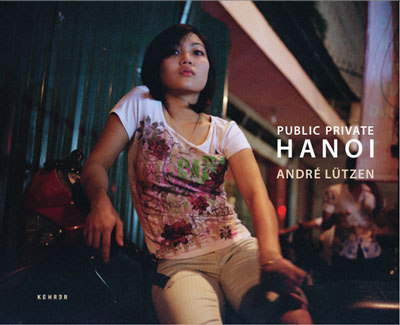
Many of the photographs of renowned German photographer Andre Lutzen at the Goethe are unsettling and of course this is precisely what they set out to be. Lutzen has a history of delving into touchy political issues such as migration, exploitation of natural resources, globalisation and the heritage of colonialism. When viewing the images, either in grainy format when shown in slide format on the walls or in the book about the project, ‘Public Private Hanoi’, I initially felt like a sleezy voyeur and I guess that this may be one of the reactions that Lutzen is hoping to provoke from his primarily middle-class viewers. After that, a sense of empathy is an appropriate human response.
Local expat photographer Jamie Maxton-Graham Maxtone-Graham is also able to push similar buttons in his Long Bien series, although his seem to have a different sense of integrity, probably due to his more intimate and long-term relationship with his subjects and locale.
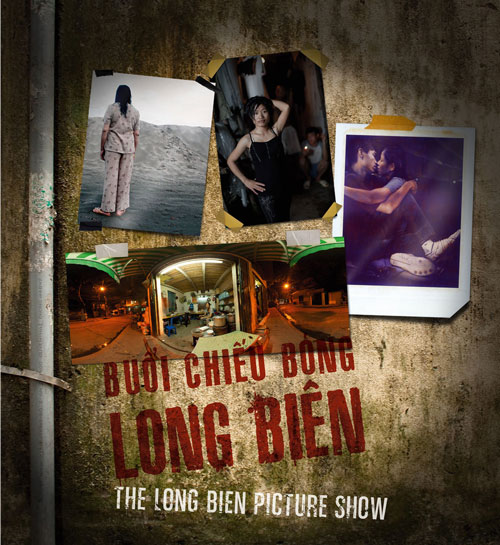
Click to enlarge
Lutzen’s have a more surface feel to them as they weave a path through the alleys and byways of non-middle-class Hanoi but they certainly grab your immediate attention. They give a glimpse into a real Hanoi where the majority of its citizen’s live. And if you ever cross further into the areas where many of the million or so, poor rural immigrants live in dire tenements and slums, often on an illegal basis, many of the images have an even greater poignancy and potency for you.
When I took along a viewer who lives with his family in a small single room that is often awash and where their floor is a platform perched above the dirt, he thought that most of the subjects in Lutzen’s shots had it lucky. They lived and socialized his aspirational lifestyle.
Lutzen’s book probably won’t make it onto most tourist’s or expat’s must-buy list of mementos about Hanoi. Those Hanoians who resent their city being portrayed as anything but a set of clean and often peaceful cliches would probably prefer to see the book excised. But it’s one of the very few photography books around that steers clear of most of the usual visual clichés we associate with photography about the city though a few of the images could head that way in the not too distant future.
Lutzen’s still photography is accompanied by two pieces of Video Art by Nguyen Trinh Thi. Titled ‘Coming and Going’. The artist revisits Hanoi after a ten year gap and finds herself alienated. Perhaps she returned expecting to find the comforting cliches that her memory had perpetuated but found herself akin to an immigrant to a mostly unrecognized place. This motivated her to put herself in the shoes of the rural immigrant and her short piece set in a bus terminal is a pertinent and powerful vignette about displacement, bewilderment and loneliness. The sense of homesickness is palpable.
It’s a very good conclusion to the three part exhibition “Hanoi – the City in Art.” It’s on until the end of 2010 and I thoroughly recommend it.

| Not a reviewer, not a critic, “Kiếm Văn Tìm” is an interested, impartial and informed observer and connoisseur of the Hanoi art scene who offers highly opinionated remarks and is part of the long and venerable tradition of anonymous correspondents. Please add your thoughts in the comment field below. |