PHM – The Live Music Scene in Hanoi and HCMC: a Comparison

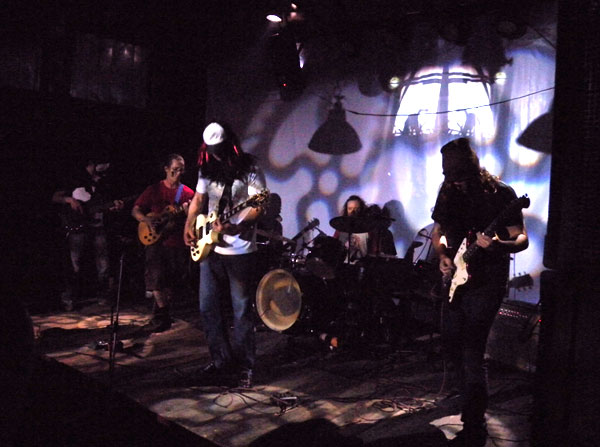
Almost a year ago, I posted an interview with Synergy Music Production (SMP), which stirred up quite a controversy among musicians in Hanoi about the cooperation between expat and local artists, as well as the difference between the “contemporary music” in Hanoi and HCMC (pay attention to the comments under the post). The first part of the issue was settled quite promptly among the musicians themselves with some help from The Word Hanoi. However, the second part was left unanswered, or at least there are no documented materials about it as far as I know. Thus, during the 8 months living in HCMC, I tried to “research” the topic and differentiate between the live music scene there and in Hanoi. Of course I will not refer to it as the “contemporary music” scene because the term “contemporary music” hasn’t even been properly defined and may need further research to deal with.
Let me start with this fact: whoever thinks Hanoi and HCMC are the same just because they are both Vietnam should try living in both places – believe me, you will definitely think again. Not only are climate, lifestyle, shopping, food, accent, etc. very different (you can check my blog where I compare life in Hanoi and Saigon), but the entertainment is as well. Thus, when talking about live music we need to take into consideration that Hanoi is the cultural and political capital, while HCMC is the commercial center and its people tend to be more outgoing and western influenced. Those factors absolutely contribute to shaping the music scene in the two cities.
First of all, let’s confirm one thing: think original and experimental music, think Hanoi! Can you believe that?! To be honest, that was the most surprising thing I discovered. Everyone in Hanoi knows it is easy to find original music just by following the SMP crew and so easy too to search for a taste of experimental simply by going to concerts by Tri Minh, Vu Nhat Tan, Dao Anh Khanh as well as many other experimental artists. But where in HCMC would you find such “creative stuff” regularly? Pardon my limited knowledge but after 8 months I still couldn’t figure that out. Live music in HCMC is much more commercial and the bands mostly play covers. The explanation could be that venues only want the bands to please the crowds because people always want to listen to something they already know, or there is actually no one standing up to start the “original revolution” yet. Surely it’s not because no one is writing their own music in HCMC. One note: this fact does not apply to local rock clubs in Hanoi because it seems like most rock bands in Vietnam in general are doing covers, apart from some original performances to introduce their new albums. Otherwise, it’s still the land of metal/MTV cover shows.
However, when talking about the scale of music festivals we have to mention HCMC first. The Saigon Sound System always put on very big and expensive music fests, such as the Loreto International Music Festival or Saigon SoundFest, the latter being said to have attracted 40,000 people. They bring in internationally popular musicians like Bob Dylan as well as huge names in the Vietnamese music industry. However, Hanoi isn’t too far behind, with the annual music festival organized by CAMA and the Hanoi Sound Stuff festival led by Tri Minh. The difference is that normally the music festivals in HCMC focus more on popular acts, which means everyone can enjoy it and have fun, while the festivals in Hanoi tend to be more selective in their audiences with certain genres of music dominating the shows (e.g Sound Stuff specializes in electronic and experimental music, while CAMA often showcases young emerging bands with a wide selection of punk, alternative, electro, reggae, etc). The ticket prices in HCMC are always much higher as well.

The third thing I would like to point out is the scale of live music venues in both cities. Again Hanoi comes behind HCMC in terms of number of large live music venues. This is obvious to see because HCMC is physically bigger than Hanoi so of course venues there tend to have more spaces to grow. Going around District 1 in HCMC, you can find large stages in Vasco’s, Hard Rock Café or Saloon 17 (which, however, only hosts their Filipino house bands), or other smaller but quite popular venues like Thi Café, Bernie’s and La Habana. District 3 is the “rock district” with the long-time famous Acoustic, Yoko, RockFanClub and also the small but cozy Cacophony. District 2 is the acoustic and unplugged area with Snap Café and Buddha Bar, and is also the expat area. Basically, international bands going to HCMC have many indoor options to choose from while honestly speaking, they have only one place to go in the capital – Hanoi Rock City. Of course Hanoi has many cool live music spots such as ATK, Tadioto, Cinematheque, Hair of the Dog, Hanoi Social Club, PUKU, Southgate (city center and the old quarter area) or Chez Xuan and La Cooperative (An Duong) and many more, but none have the capacity to host big indoor gigs like Hanoi Rock City does. I also have to mention the local rock venues such as Holyland, Heresy, Polygon or Ngu Cung Club but they don’t connect much with the expat and international bands and mostly communicate locally.
Another important point, especially for audiences, is the cost. In HCMC the price for a drink at a live music show can be from 1.5 to 3 times as much as in Hanoi, depending on the venue. That makes a lot of people think musicians must earn a fortune there. However, surprisingly they don’t! Musicians in HCMC just like in Hanoi, including professional bands, have to do “real” jobs to cover their expenses, because the payment a band receives there is more or less just the same as in Hanoi. Now that makes me wonder where the money goes(!).
Finally, one more advantage of HCMC that I would like to mention is that there seems to be a more natural combination of Vietnamese and expats in HCMC than in Hanoi, in both the bands and the audiences. It is common to see music bands with foreign and Vietnamese members playing together in HCMC. And at Vasco’s, Hard Rock Café, and elsewhere you will easily find groups of expats and Vietnamese coming for the shows, while in Hanoi it seems like where there are Vietnamese musicians there are only Vietnamese crowds and where there are expat musicians there are expat crowds or maybe Vietnamese who often hang out with expats. People in HCMC only care about entertainment and they don’t define a place as Vietnamese or expat; the only thing that draws them to a music venue is the type of music being played or the artists playing. Of course Hanoi is trying hard to overcome this obvious issue, but in order to catch up with HCMC it’s not enough if only the venues try to change their strategies to attract both foreign and local audiences. The audience themselves have to change their way of thinking too. Music fans can’t be divided geographically but they speak just the same language as long as they listen to the same genre of music. Then why do you have to differentiate between “local” and “foreign”, Hanoi?
Now, after all the comparison, which should come first – Hanoi or HCMC? That is a real tough call. HCMC has all its audience-friendly atmosphere while Hanoi is favor of the artists’ creativity. Thus, it really depends on your preference to decide whether you prefer music in Hanoi or HCMC. As a rock fan, I must say the HCMC rock scene is more attractive since they play more various genres than Hanoi, also my two favorite Viet rock bands are actually from there, Giao Chi and Black Infinity. For “fun lovers” and “party animals”, HCMC completely surpasses Hanoi when talking about nightlife and crowded music festivals. For musicians playing cover or dance music HCMC may still be a better place with its variety of places and events to perform. However, if you are a musician expecting to experiment with your own music, it might be ironic to say either you consider making a move up north or really fighting to make a revolution down south.
NOTES: This article focuses mostly on rock, experimental and music played at live music bars/clubs and does not apply to local folk music, dance/DJ/hiphop music, classical music, instrumental chamber music, jazz or any official music performance under governmental organization.
I would like to say thanks to all of my musician, music producer and journalist friends who have provided me with information and statistic to write this article. And a special thank goes to Peter Cornish, manager of DepSkillz, who has helped me with his insights of HCMC music scene.

| Pham Hoang Mien has been with Hanoi Grapevine for some time, mainly involved in social media and occasional translation. As an enthusiastic music lover, now she wants to challenge herself in a new role – being a columnist writing about music and musicians for the site. |